
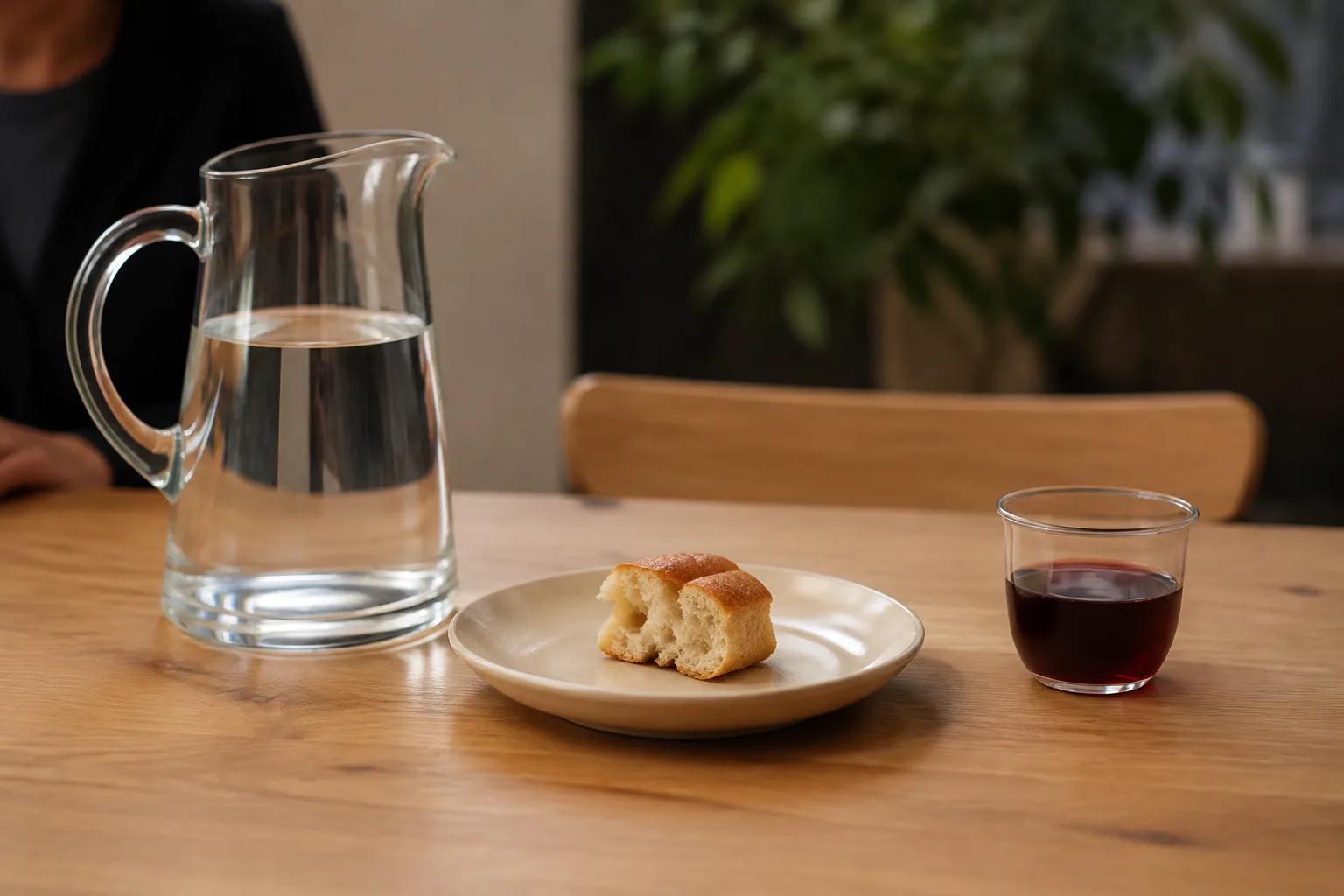
During worship, you may see someone baptized with water or people sharing bread and a cup. The two rites may look similar, but they have different meanings and participation requirements. If they are new to you, you may ask what each rite is and who may take part before you follow along.
Key point Baptism expresses a confession that a person will live as one who belongs to Christ and also signifies belonging to the community. Communion is a rite in which the community remembers Jesus' death together. Denominations differ in how they use water, whether they baptize infants, and who may receive communion, so check the guidance of the church you visit.
What to remember
- Baptism is connected with becoming a disciple of Christ, and a church may provide preparation and guidance for making a confession of faith.
- Communion is a rite in which people share bread and cup, remember Jesus' death, and reflect on the community.
- Infant baptism, the method of immersion, the meaning of communion, and eligibility to participate differ among denominations and churches.
- Ask in advance about the requirements for baptism and confirmation and the elements used in communion. If the participation rules are unclear, you may simply observe.
Baptism makes faith visible through water
In Matthew 28, the risen Jesus tells the disciples to make disciples of all nations and baptize in the name of the Father, the Son, and the Holy Spirit. The Constitution of the Presbyterian Church of Korea (TongHap) describes baptism as a rite performed with water that expresses the promise to belong to Christ and live a new life.
When preparing for baptism, first ask what you need to understand
The water used in baptism is not an incantation that changes a person automatically. If you receive preparation, listen to the explanations of the gospel, the confession of faith, and the promises made in the rite, and ask about anything you do not understand. The length of preparation and the way questions are handled may differ by church.
Even if a family member or friend was baptized first, you do not have to decide at the same pace. As you prepare, consider whether you can explain the faith and promises in your own words, and ask whether you can continue learning and asking questions after baptism. The church also has a responsibility to teach and care for a newly baptized person.
The method differs even when the same water is used
The Constitution of the Presbyterian Church of Korea (TongHap) accepts pouring or sprinkling water on the head and also explains infant baptism given to believers' children. The Doctrine and Discipline of the Methodist Church of Korea calls baptism and the Lord's Supper the two sacraments Jesus established. A sacrament is a rite that declares God's grace as a visible sign. The confession of faith of the Baptist Church of Korea describes baptism as immersion, in which a person who has confessed faith is immersed in water.
In the Presbyterian Church of Korea (TongHap), there is a process of confirmation for someone baptized as an infant to later grow up and confess their own faith. The confession of faith of the Baptist Church of Korea describes baptism after confession of faith as a prerequisite for church membership and participation in the Lord's Supper. These are descriptions from each denomination's documents, and standards from one denomination cannot be applied directly to another.
In communion we remember the gospel with bread and cup
In 1 Corinthians 11, Paul recounts that Jesus gave bread and a cup to the disciples on the night he was arrested. Churches that participate in communion remember Jesus' death and continue to proclaim that death until he returns. The shared act of eating also carries the meaning that those gathered belong to one body in Christ.
The Presbyterian Church of Korea (TongHap) and the Methodist Church of Korea describe communion as a sacrament that makes God's grace known. The confession of faith of the Baptist Church of Korea describes communion as symbolic obedience, remembering the death of Jesus who rescued us from sin and death and waiting for his return. How the meanings of bread and cup are explained is not the same in every denomination.
Check communion requirements and elements in advance
In 1 Corinthians 11, Paul tells readers to examine themselves while also addressing the mistreatment of other people in the community. Rather than reducing this to a rule that only perfect people may receive communion, consider both the meaning of the rite and how participants treat others.
Actual participation requirements differ according to baptism or confirmation status and the rules of a church or denomination. If you are visiting for the first time, ask an usher, 'May I participate too?' If you are unsure, you may remain seated and observe that day.
You can also ask in advance whether the cup contains wine or grape juice and whether the bread contains wheat. If you have a food allergy or need to avoid alcohol, ask whether an alternative food or drink is available.
List the questions to ask before deciding
If you are considering baptism, ask, 'Who may be baptized?', 'What happens during preparation and the confession of faith?', and 'Do you recognize baptism received in another denomination?' For communion, check who may participate and which elements are used in the rite.
If you do not understand the meaning or requirements, you may listen to more explanation and delay your decision. Understanding what you are confessing and taking part in matters more than following the motions. If asking feels difficult, point to the church bulletin or worship guide as you ask.
Questions Before Taking Part in a Church Ceremony
Check the guidance provided by the church you visited and note anything you have not yet decided.
What you enter is not sent to a server. If you save it, it will remain in this browser and be loaded automatically on your next visit. Content you copy or download may remain on your clipboard or in files. On a shared device, do not save, copy, or download your entries. Do not enter your real name, contact details, health information, personal confessions, or details of harm you have experienced.
Which ceremony would you like to know more about, baptism or Communion?
What do you need to check about instruction, baptism or confirmation of church membership, and the elements used in the ceremony?
Write one sentence you would like to ask a church guide first.
Even after hearing the explanation, is there anything that makes you want to wait before participating or learn more?
Notes
- Whether infant baptism is recognized, whether immersion is used, how communion is understood, and who may participate differ by denomination. Consult both your church's official materials and the guidance given during worship.
- Having a food allergy or needing to avoid alcohol does not mean that you lack faith. You may ask the church before communion whether alternative food or drink is available.
References
- Scope of application
- This article does not compare every teaching on baptism and communion among Korean Protestant denominations or every local church's participation requirements.
- Korean Bible Society Bible platform: Matthew 28:18-20
- Korean Bible Society Bible platform: 1 Corinthians 11
- Presbyterian Church of Korea (TongHap) General Assembly Constitution, Doctrine, Part 1: Baptism and communion
- Methodist Church of Korea Doctrine and Discipline: Sacrament
- Baptist Church of Korea Confession of Faith: Baptism and the Lord's Supper